
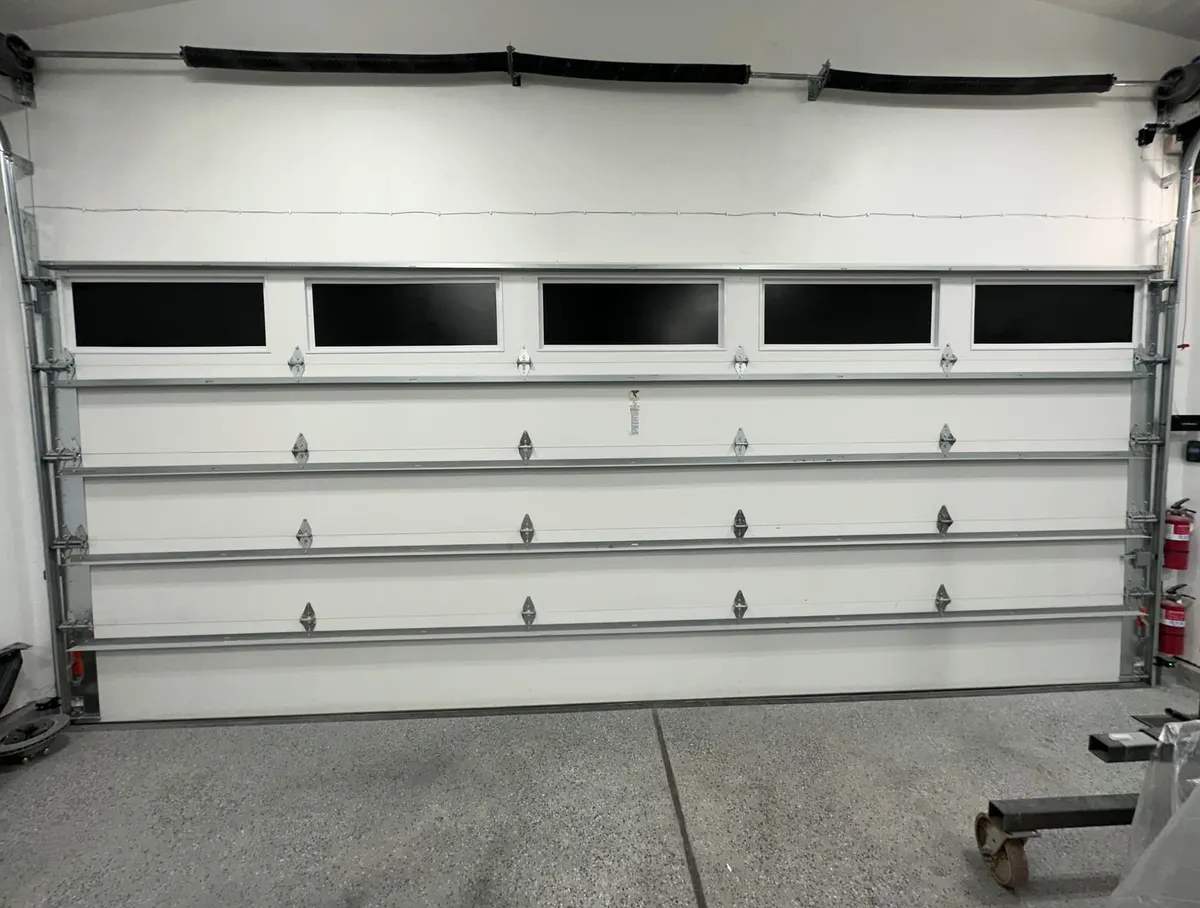
What Waiting Another Season Actually Costs You
Every hurricane season you put off replacing a tired or non-rated garage door, you're gambling with the most vulnerable opening on your house. A door that fails under wind pressure doesn't just blow in — it lets pressure build inside the garage and can take part of the roof with it. Add in a season of South Florida humidity working on rusted hardware and swollen panels, and "we'll deal with it next year" usually turns into an emergency call during the next tropical storm watch, when installers are booked solid and prices aren't negotiable anymore.
So before this turns into another round of "I told you so," here's what permits, HOA rules, and wind-load codes actually require — separated from what's just opinion.
Permits: What They're Actually For
A permit isn't bureaucratic busywork. It exists so an inspector confirms the new door and its track, hardware, and opener are installed correctly and rated for the wind pressures your home's location requires. For a straight swap of an existing door with a comparable one, many municipalities still require a permit because garage doors are treated as a structural opening, not just an appliance.
- Who pulls it: A licensed, reputable installer should handle the permit as part of the job — if a contractor tells you not to bother, that's a red flag, not a shortcut.
- What gets inspected: Track anchoring, header reinforcement, and the door's wind-load rating label, confirming it matches what was approved.
- Why it matters for resale: An unpermitted door replacement can surface during a home sale inspection and become a negotiating point against you.
Wind-Load Codes: The Part That Isn't Optional
Florida's building codes require garage doors in wind-sensitive coastal areas to meet specific wind-load and impact ratings — essentially, how much pressure the door can withstand before it buckles or the panels separate from the track. This isn't about looks; it's about physics. A door that isn't rated for your wind zone can fail even if it looks solid, because the failure happens at the track connections and hardware, not just the panel material.
A few things worth knowing when you're comparing options:
- Rated doors cost more upfront — expect to pay more than a standard non-rated door, often in the range of several hundred to over a thousand dollars more depending on size and material, but the cost difference is small compared to storm damage and insurance claims.
- Reinforced tracks and heavier gauge steel are usually part of a wind-rated system — it's not just the door panel that changes, it's the whole assembly.
- Impact-rated glass inserts, if your door has windows, need separate certification — decorative windows on an older door are a common weak point.
If your current door predates current wind codes, a straight replacement isn't optional cosmetics — it's a code-driven upgrade, and that's worth saying out loud during the argument.
HOA Rules: Where the Real Disagreements Happen
This is usually where couples actually get stuck, because HOA requirements are about appearance and process, not safety — and they can feel arbitrary compared to wind codes. Typical HOA involvement includes:
- Design approval — panel style, window placement, and sometimes color have to match an approved palette or architectural guideline before installation.
- Submission timelines — many associations require an application and approval period before work starts, which can take weeks, not days.
- Material restrictions — some HOAs limit choices to specific materials or finishes to keep the neighborhood's look consistent.
The mistake most homeowners make is assuming HOA approval and permit approval are the same step. They're not. You can have a municipal permit ready to go and still be blocked by your HOA if you skipped their submission process — or vice versa, with HOA approval in hand but no permit filed. Doing both in the right order avoids a redo, which is the actual argument-ending fact to bring to the table: skipping either one risks having to remove and reinstall a door you already paid for.
How to Settle It Without Guessing
- Pull your HOA's architectural guidelines (even an old copy) and check if garage doors are mentioned — most are.
- Call your municipal building department or check their website for garage door permit requirements tied to wind-load zones.
- Get quotes from installers who explicitly mention wind-load ratings and permit handling in their proposal — not just price and style.
- Submit the HOA application and the permit application in parallel once you have a quote, since approval timelines can overlap.
None of this is glamorous, but it's a lot cheaper than arguing about it after a storm damages an unpermitted door and your insurance adjuster asks for paperwork that doesn't exist.
When to Call Lake Worth Beach Garage Door Experts
If you're staring down a replacement and don't want to sort out wind-load ratings, HOA paperwork, and permit timing on your own, that's exactly the kind of job we handle daily. Our Garage Door Installation & Replacement service includes identifying the correct wind-load rating for your home's location and coordinating the permit process, so you're not stuck mid-argument trying to decode building code language. If you're not sure whether your current door even meets today's standards, our Garage Door Maintenance & Tune-Up visit can flag rust, track wear, and hardware fatigue from salt air and humidity before storm season puts it to the test.
If you're in Lake Worth Beach, Boynton Beach, Lantana, Greenacres, West Palm Beach, Palm Springs, Hypoluxo, or Delray Beach and need a straight answer on permits, wind codes, or HOA-compliant options, call Lake Worth Beach Garage Door Experts for a same-day quote — and finally settle the argument with facts instead of guesses.