
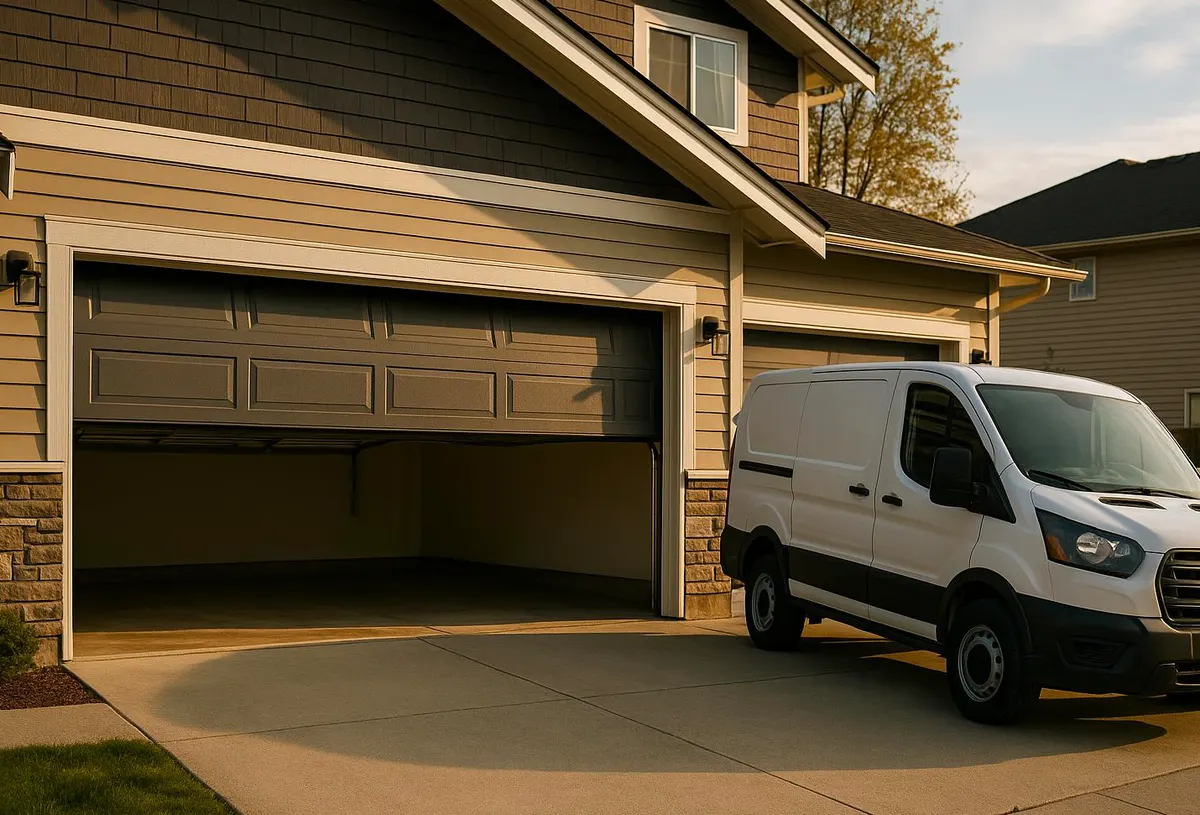
On a typical call out here, the homeowner meets us in the driveway with two different stories. One of them says the door is "basically brand new," the other says it's "been dying for years." We check the install date, the spring wind cycles, the rust on the bottom bracket, and usually the truth is in between — the door isn't new, but it's not dead either. It's just lived a harder life than a garage door fifty miles inland would have.
The Honest Lifespan Numbers
These are general ranges, not guarantees — every door's life depends on usage and conditions:
- Garage door panels (steel, with proper care): 15–30 years
- Torsion springs: rated for about 10,000–15,000 cycles, which works out to roughly 7–12 years for an average household
- Garage door openers: 10–15 years, sometimes less if it's run hard or exposed to heat and humidity
- Rollers, cables, and hardware: 7–10 years before they start showing wear
Notice that a garage door system isn't one lifespan — it's four or five overlapping ones. That's usually where the argument starts: one spouse is talking about the panels, the other is talking about the opener that's been grinding for two years.
What Shortens It Here
South Florida conditions take a real toll, and it's not just salt spray near the coast. A few things we see over and over on service calls in this area:
- Humidity and moisture: Wood composite panels swell and warp, and steel panels rust from the inside out at seams and bottom corners where water sits after afternoon downpours.
- Salt air: Even a few miles from the water, salt accelerates corrosion on springs, hinges, and track hardware — untreated hardware pits and weakens faster than it would inland.
- Heat cycling: Garages here swing from cool mornings to oven-hot afternoons. That expansion and contraction stresses opener circuit boards and weakens lubricant on moving parts faster than in milder climates.
- Storm wind load: Every time a door flexes under gusty wind without adequate wind-load bracing, it's absorbing stress it wasn't built to take repeatedly. Over a few hurricane seasons, that adds up on tracks and panel seams.
- Skipped maintenance: A door that never gets lubricated, balanced, or inspected is simply working harder on every single cycle, which shortens everything from springs to opener gears.
What Actually Extends It
The good news: most of what shortens a door's life is preventable, not inevitable.
- Lubricate moving parts (rollers, hinges, springs) every few months with a silicone-based lubricant — not WD-40, which attracts grit.
- Check the balance twice a year. Disconnect the opener, lift the door halfway by hand, and let go. It should hold its position. If it drifts, the springs are compensating for wear and are closer to the end of their cycle count.
- Rinse salt residue off tracks and hardware periodically if you're near the coast, the same way you'd rinse outdoor fixtures.
- Replace weatherstripping when it cracks or flattens — it's cheap insurance against moisture getting to the bottom panel and hardware.
- Keep the opener's battery backup fresh and avoid letting the unit sit in direct heat if the garage isn't ventilated; heat is harder on circuit boards than almost anything else.
- Schedule a tune-up annually, ideally before hurricane season ramps up, so a technician catches rust, wear, and loose hardware before storm season puts it all to the test.
So, Who Wins the Argument?
If the panels are solid but the door is noisy, slow, or the opener struggles, that's wear-and-tear territory — a tune-up or targeted repair usually settles it. If you're seeing rust-through on panels, repeated spring failures, or an opener that's needed three repairs in two years, you're past the point where fixing it piece by piece makes financial sense. That's a replacement conversation, not a repair one.
When to Call Lake Worth Beach Garage Door Experts
If you're not sure which side of that line your door is on, that's exactly the call we're used to getting. We'll inspect the spring cycle count, check the opener's condition, and look for the rust and wear patterns specific to coastal exposure. Our Garage Door Maintenance & Tune-Up service catches small problems before they become spring or cable failures, and if the door's genuinely at the end of its life, our Garage Door Installation & Replacement service gets you a new system built for South Florida's wind-load and humidity demands, not a generic big-box door.
If you're in Lake Worth Beach, Boynton Beach, Lantana, Greenacres, West Palm Beach, Palm Springs, Hypoluxo, or Delray Beach and want a straight answer on repair vs. replace, give us a call — we offer same-day availability and honest pricing, no guesswork required.